
The Encyclopedia Strategy: Transforming Knowledge into Visual Assets
Move beyond single-page printables by building high-authority, multi-page visual publications that command premium market value.
The Encyclopedia Strategy shifts your focus from selling individual printables to creating structured, multi-page visual publications that build long-term brand authority. By leveraging AI-assisted frameworks like Encyclopedia Deck and SlamBook Forge, creators can automate the production of high-value, cohesive content portfolios that command higher prices.
Why is the era of the single-page printable ending?
The digital marketplace is currently saturated with low-effort, single-page printables that struggle to differentiate themselves. To survive in 2026, creators must pivot toward the Encyclopedia Strategy: a method of bundling knowledge into structured, multi-page visual publications. This approach transforms fragmented content into a cohesive asset portfolio that commands higher market value and builds lasting brand equity.
When you sell a single printable, you are competing on price in a race to the bottom. When you sell a 60-page visual encyclopedia, you are selling a comprehensive resource. This shift moves your brand from a commodity provider to an authority figure. Customers are willing to pay a premium for curated, organized information that saves them time and provides a superior user experience.
Building these assets no longer requires months of manual labor. By utilizing specialized frameworks, you can maintain high quality while scaling production. The goal is to stop chasing one-off sales and start building a library of intellectual property that serves your audience for years to come.
How do you structure a professional visual encyclopedia?
The primary challenge in creating long-form content is not the writing itself, but the structural organization. Without a blueprint, you are left staring at a blank document, which leads to inconsistent pacing and design fatigue. Tools like Encyclopedia Deck provide a proven framework, typically centered around a 60-page format consisting of 30 panoramic two-page spreads.
This structure is intentional. It forces you to think in terms of visual storytelling rather than just text blocks. By organizing your content into introductions, facts, trivia, and timelines, you create a rhythm that keeps the reader engaged. This modular approach allows you to swap topics while keeping the underlying architecture consistent, which is the secret to rapid, high-quality production.
When you use a pre-defined structure, you eliminate the guesswork. You know exactly how many images you need, how much text is required for each spread, and how the final PDF should be assembled. This turns a daunting creative project into a manageable, repeatable workflow that can be executed with precision.

Can you automate the visual consistency of your brand?
Visual consistency is the hallmark of a professional brand, yet it is the most common failure point for AI-generated content. If every page of your publication looks like it was created by a different artist, your authority evaporates. To solve this, you must move away from random prompting and toward a library-based approach.
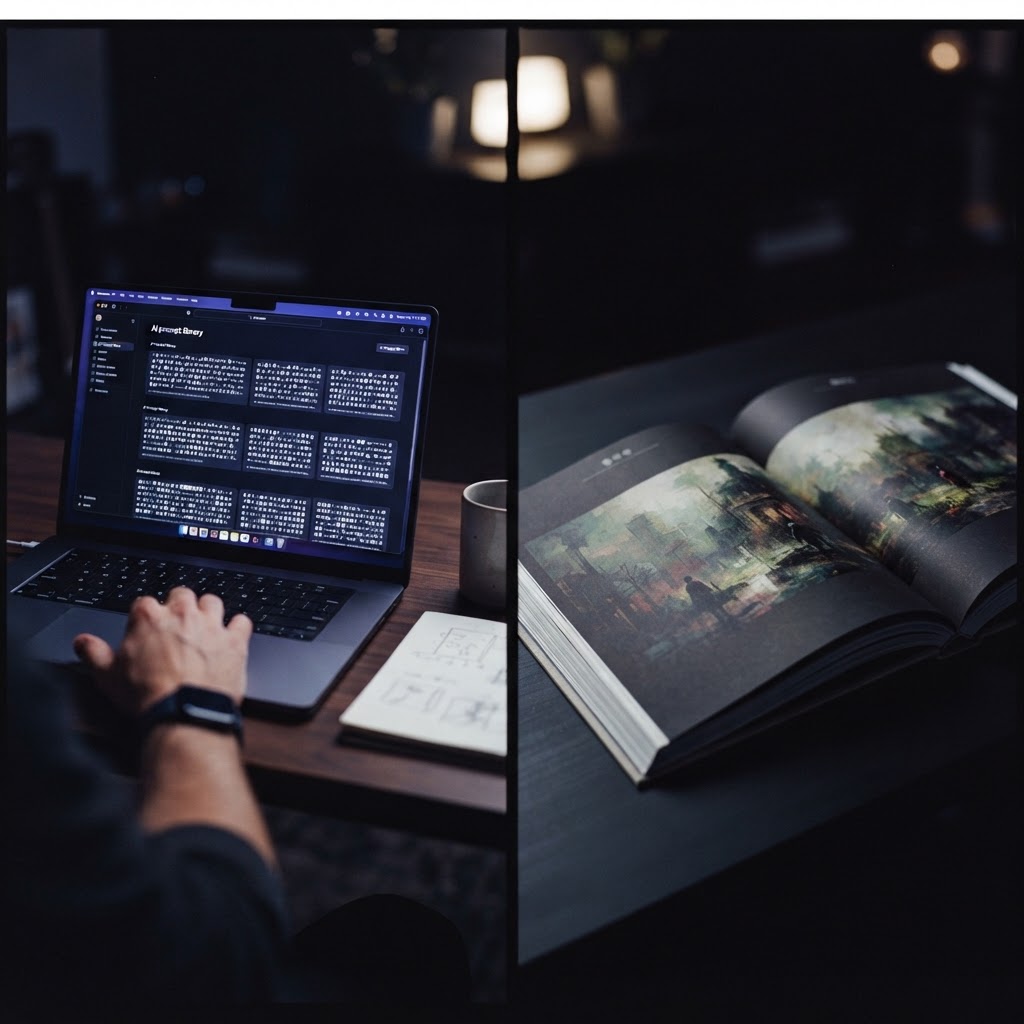
Resources like SlamBook Forge offer a solution by providing 288 ready-made prompt sets. These sets are designed to be fed into AI image generators like Midjourney or DALL·E to ensure that your illustrations maintain a unified style, color palette, and composition. Instead of starting from scratch for every page, you are selecting from a curated menu of high-quality visual directions.
This method bridges the gap between raw AI potential and commercial product creation. By using these prompt libraries, you ensure that your visual assets look like a cohesive collection rather than a random assortment of images. This consistency is what allows you to charge premium prices for your work, as it signals to the buyer that they are purchasing a polished, professional product.
What is the most efficient workflow for 2026?
The most successful creators in 2026 follow a hybrid workflow that combines AI automation with human strategic oversight. Start by selecting a central theme and using a tool like Encyclopedia Deck to map out your 30-spread structure. Once the outline is set, use an AI writing assistant to generate the core content for each section, ensuring the tone remains consistent throughout.
Next, move to your visual generation phase. Use the prompt sets from SlamBook Forge to generate your graphics, ensuring you maintain a consistent illustration style across the entire book. Once the text and images are ready, assemble them into a final PDF. This process is significantly faster than traditional design methods because the structural heavy lifting is already done for you.
Finally, perform a human review to ensure the content meets your quality thresholds. Not every page needs to be a masterpiece, but the overall flow must be logical and the visuals must be aligned with your brand identity. This workflow allows you to produce high-value assets in a fraction of the time it would take to build them manually.
How do you maintain quality while scaling production?
Scaling content production does not mean lowering your standards. It means building systems that maintain quality at higher volumes. The key is to define what goes straight to publishing versus what needs manual review. Some content, such as trivia or timelines, can be automated with minimal oversight, while core brand messaging requires a human touch.
Set clear quality thresholds for your projects. If a page is time-sensitive, focus on getting it to a 'good enough' state that provides value to the reader. If the content represents your brand publicly, invest the extra time to ensure it is polished and error-free. This tiered approach prevents burnout and ensures that your most important assets receive the attention they deserve.
Remember that your goal is to build a portfolio of assets. Each encyclopedia you create adds to your brand's authority. By focusing on systems rather than individual tasks, you can build a sustainable content engine that produces professional-grade publications consistently without blowing your budget or your schedule.
What are the common pitfalls to avoid?
The most common mistake creators make is trying to do everything from scratch. They spend hours writing prompts, choosing colors, and designing layouts for every single page. This is an inefficient use of time that leads to inconsistent results. Instead, leverage existing frameworks and prompt libraries to handle the technical execution.
Another pitfall is ignoring the importance of the 'panoramic spread.' Many creators focus on single pages, which limits the visual impact of their work. By designing for two-page spreads, you create a more immersive experience for the reader. This format is inherently more valuable and professional, making it easier to justify a higher price point for your digital products.
Finally, avoid the temptation to use AI for everything without review. AI is a tool, not a replacement for your strategic vision. Your role is to curate, edit, and assemble the content into a meaningful whole. If you treat your AI tools as assistants rather than authors, you will produce work that is both efficient and uniquely yours.
What is the final verdict for your content strategy?
The Encyclopedia Strategy is the most effective way to build long-term authority in an AI-saturated market. By moving away from single-page printables and toward structured, multi-page visual publications, you position your brand for higher revenue and greater customer loyalty. The tools available in 2026, such as Encyclopedia Deck and SlamBook Forge, make this transition accessible to any creator willing to adopt a systems-based approach.
My recommendation is to start small. Choose one topic, use a proven 60-page framework, and commit to building your first visual encyclopedia. Do not get bogged down in the technical details of AI generation; focus on the structure and the value you are providing to your audience. Once you have one successful publication, you can replicate the process to build a library of assets.
Stop competing on price and start competing on value. The future of content creation belongs to those who can organize knowledge into beautiful, authoritative visual portfolios. Start building your encyclopedia today, and you will find that your brand equity grows alongside your library.