The Visual Frontier: Navigating Generative Image Art in 2026
From prompt engineering to commercial mastery, here is how the industry is evolving for the modern creative professional.
Generative image art has matured from an experimental novelty into a cornerstone of professional creative workflows. This guide explores the current landscape of leading tools like Midjourney, Adobe Firefly, and Flux, while providing a roadmap for navigating commercial licensing and the artistic trends defining 2026.
The State of the Art: 2026 Landscape
As we move through 2026, the generative image market has shifted from a 'wild west' of experimental models to a refined ecosystem of specialized tools. The primary players—Midjourney, Adobe Firefly, DALL-E 3, and the rising open-source star Flux—have carved out distinct niches. Midjourney remains the gold standard for artistic quality and prompt adherence, while Adobe Firefly has solidified its position as the safest harbor for enterprise creatives due to its exclusive training on licensed stock imagery.
Integration is the defining theme of this year. We are no longer just visiting websites to generate images; we are seeing these models embedded directly into the software we use daily. Whether it is Photoshop’s generative fill or Canva’s design suite, the friction between 'idea' and 'asset' has been effectively eliminated. This convergence means that the barrier to entry for high-quality visual production is lower than ever, allowing non-designers to participate in professional-grade creative workflows.
However, this accessibility brings a new challenge: the need for discernment. With so many models available, choosing the right tool depends less on raw power and more on the specific requirements of the project. Whether you need the hyper-realism of Flux or the conversational iteration of ChatGPT’s image generation, the modern creative must act as a curator of AI capabilities rather than just a user of a single platform.
Mastering the Prompt: Beyond Basic Descriptions
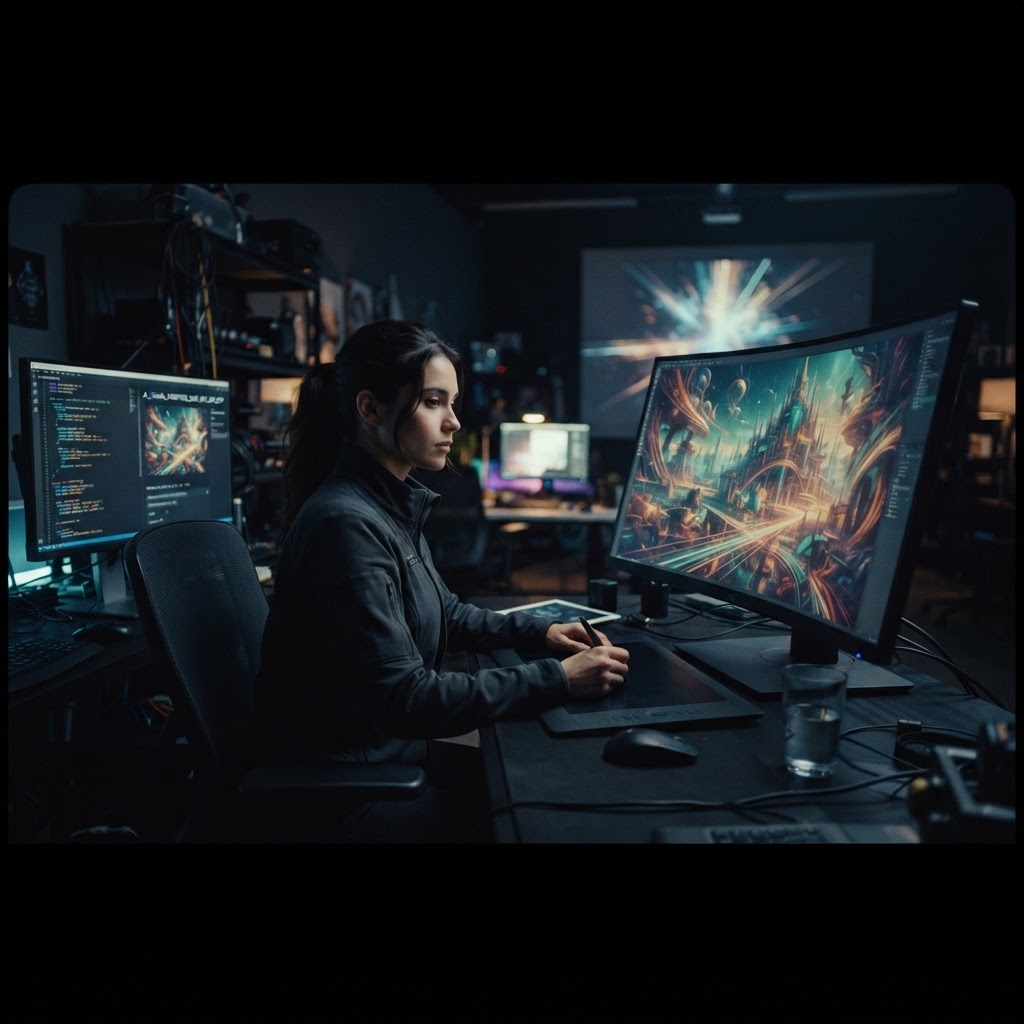
Prompt engineering has evolved from a series of 'magic keywords' into a nuanced language of intent. In 2026, the most effective prompts are those that define context, lighting, composition, and stylistic constraints rather than just listing objects. The best practitioners are now using 'collaborative prompting,' where they treat the AI as a partner, iterating through multiple versions to refine the output.
For instance, when working with Midjourney, users are increasingly leveraging reference images to anchor the AI’s stylistic output, ensuring consistency across a series of assets. This is a critical skill for branding, where maintaining a specific visual identity is paramount. By combining natural language descriptions with technical parameters—such as aspect ratios, shadow depth, and specific color palettes—creatives can exert a level of control that was previously impossible.
Furthermore, the rise of conversational interfaces like ChatGPT 5.2 has changed the workflow entirely. Instead of crafting the 'perfect' prompt on the first try, users can now engage in a dialogue with the model. You can ask the AI to 'move the subject to the left' or 'soften the lighting,' making the process feel more like working with a junior designer than operating a complex piece of software. This shift toward iterative refinement is the hallmark of the 2026 creative professional.
Commercial Licensing and Legal Safety
For businesses, the question of 'can I use this?' is more important than 'how does it look?' The legal landscape surrounding AI-generated art is still evolving, but clear standards have emerged. Adobe Firefly stands out as the industry leader in commercial safety, as it is trained exclusively on licensed Adobe Stock and public domain content. This provides a level of IP indemnification that is essential for enterprise-level marketing and advertising.
Other platforms, such as Artnovaai, have begun offering commercial licenses on all plans, including free tiers, to attract small businesses and independent creators. However, users must remain vigilant. Before using an image for a commercial campaign, it is vital to review the specific terms of service for the tool used. Some platforms restrict commercial use to paid tiers, while others may have clauses regarding the ownership of the output.
When in doubt, the safest path is to use tools that explicitly state their training data sources and provide clear commercial rights. As we look toward the future, we expect to see more 'Anchor-signed' or certified AI assets, where the provenance of the image—including the model used and the training data involved—is cryptographically verified. This will be the next major step in making AI-generated content a standard part of the corporate creative supply chain.
The Rise of Hyper-Realism and Experimentalism
The aesthetic trends of 2026 are moving away from the 'uncanny valley' of early AI art toward two distinct poles: extreme hyper-realism and bold, surreal experimentalism. Hyper-realism, often referred to as 'nano banana' style, focuses on intricate details, natural lighting, and textures that are indistinguishable from high-end photography. This is particularly useful for product mockups and architectural visualization.
Conversely, there is a growing appetite for surrealism—images that lean into the 'AI-ness' of the medium. This includes bold color palettes, impossible geometries, and abstract compositions that would be difficult or impossible to capture with a traditional camera. This trend reflects a shift in how audiences perceive AI art; it is no longer just a tool for imitation, but a medium for creative expression in its own right.
These trends are being driven by the community's desire for authenticity. As AI-generated content becomes ubiquitous, the 'perfect' image is becoming less valuable. Instead, creators are looking for 'imperfect' imagery—visuals that feel human, tactile, and unique. This is why we see a surge in interest for tools that allow for custom model fine-tuning, such as Leonardo AI, which enables creators to train the AI on their own specific aesthetic style.
Workflow Integration: The 'Nexus' Approach
The most successful creative teams in 2026 are those that have integrated AI into their existing software stacks rather than treating it as a separate, siloed activity. The goal is to minimize context switching. When an AI tool lives inside your design software, the creative flow remains uninterrupted. This is the philosophy behind the 'Nexus' approach: adopting certified, governed AI skills that run where your team already works.
By using tools that offer deep integration—like Adobe’s Creative Cloud or Canva’s design suite—creators can generate, edit, and refine assets without ever leaving their primary workspace. This not only saves time but also ensures that the AI-generated assets are compatible with the rest of the project files. It also allows for better version control and collaboration, as the AI-generated elements are treated as just another layer in the design file.
As we look ahead, the focus will be on 'governed' AI. Companies are increasingly looking for ways to manage their AI usage, ensuring that all generated content meets brand guidelines and security standards. This is where platforms that offer centralized management and certification of AI agents will become essential. By standardizing the tools and models used across a team, organizations can ensure consistency and compliance at scale.
Looking Ahead: 2026 and Beyond
The trajectory for 2026 and beyond is clear: the convergence of media types. We are already seeing the lines blur between image, video, and music generation. The next generation of AI tools will not just generate static images; they will generate dynamic, interactive, and multi-modal content. Imagine a prompt that generates not just a hero image for a website, but the accompanying video background, the UI elements, and the ambient soundscape, all in a single, cohesive style.
This convergence will fundamentally change the role of the creative professional. The 'designer' of the future will be more of a 'director,' orchestrating multiple AI agents to produce complex, multi-layered creative projects. The technical skill of 'how to use the tool' will be replaced by the strategic skill of 'what to create and why.'
As these technologies continue to evolve, the most important asset for any creative will be their taste and their ability to curate. The AI can generate a thousand variations in seconds, but it takes a human to identify the one that resonates with the audience, aligns with the brand, and tells the right story. The future of generative art is not about replacing the artist; it is about empowering the artist to do more, faster, and with greater creative freedom than ever before.